

Table of Contents
- What You’ll Need Before You Start
- Step 1: Confirm Your Legal Authority to Sell
- Step 2: Understand the Florida Probate Process for Real Estate
- Step 3: Get the Property Valued and Prepared
- Step 4: Handle Capital Gains Tax on Inherited Property in Florida
- Step 5: Selling an Inherited House With Multiple Heirs
- Step 6: List, Market, and Close the Sale
- Common Mistakes to Avoid When Selling an Inherited Home
- Frequently Asked Questions
Last Updated: September 24, 2026
What You’ll Need Before You Start
Selling an inherited home in Ocoee, FL, starts long before the first listing photo. Most families underestimate the paperwork, and that delay costs them weeks. This step by step guide to selling an inherited home walks you through the full process, from confirming who has the legal right to sell to closing day. At David Dorman Realtor, we’ve guided Central Florida families through probate sales, multi-heir disputes, and tax questions that catch people off guard. Below, we’ll show you exactly what to gather, what to expect, and where the process usually stalls.
Before you list anything, collect these items:
- Certified copy of the death certificate
- The will, if one exists
- Any trust documents
- Recent mortgage statement and payoff amount
- Property tax bill and any HOA paperwork
- Names and contact info for every heir
- Homeowner’s insurance policy
Missing documents are the number one cause of delays. A common mistake is assuming the will alone gives you the right to sell. It usually doesn’t.
Pro TipOrder 3-4 certified death certificates at once. Banks, title companies, and county offices each want their own copy, and reordering later adds days to your timeline.
Step 1: Confirm Your Legal Authority to Sell
You cannot sell an inherited home until you have legal authority to do so. That authority comes from one of three places: a court appointment, a trust, or joint ownership with survivorship rights.
Here’s how to know which applies to you:
- Court appointment: If the home goes through probate, the court names a personal representative. Only that person can sign the listing agreement and closing documents.
- Trust: If the home was placed in a living trust, the successor trustee has authority. No probate needed.
- Survivorship rights: If you owned the home jointly with the deceased, the title may pass to you automatically.
Check the deed first. It tells you how the property was titled, and that single detail shapes everything that follows.
Step 2: Understand the Florida Probate Process for Real Estate
The Florida probate process for real estate determines who can sell the property and when. Probate is the court-supervised process of settling an estate, and in Florida it moves through several stages before a sale can close.
The basic sequence looks like this:
- File the will and open the estate with the clerk of court
- The court appoints a personal representative
- Creditors get notice and a window to file claims
- The representative gains authority to sell estate property
- The sale closes and proceeds are distributed
Florida sets a creditor claim window, but the exact deadlines and filing fees change. Check the Florida Courts probate information for current rules, or ask a probate attorney in Orange County.
The timeline varies widely. Simple estates with one heir and a clear will move faster than contested ones.
When Probate Is Not Required
Probate is not required when the home passes outside the court system. That happens in a few common situations:
- The home was held in a revocable living trust
- The deed included rights of survivorship
- The estate qualifies as small under state rules
Trust and survivorship transfers skip the court entirely. That can save months. Confirm your situation with a title company or attorney before assuming you’re exempt.
Step 3: Get the Property Valued and Prepared
A realistic valuation protects you from two costly errors: pricing too high and watching the home sit, or pricing too low and leaving money behind. Get a date-of-death appraisal, not just a current market estimate. The IRS may require it for estate tax purposes, and it sets your tax basis.
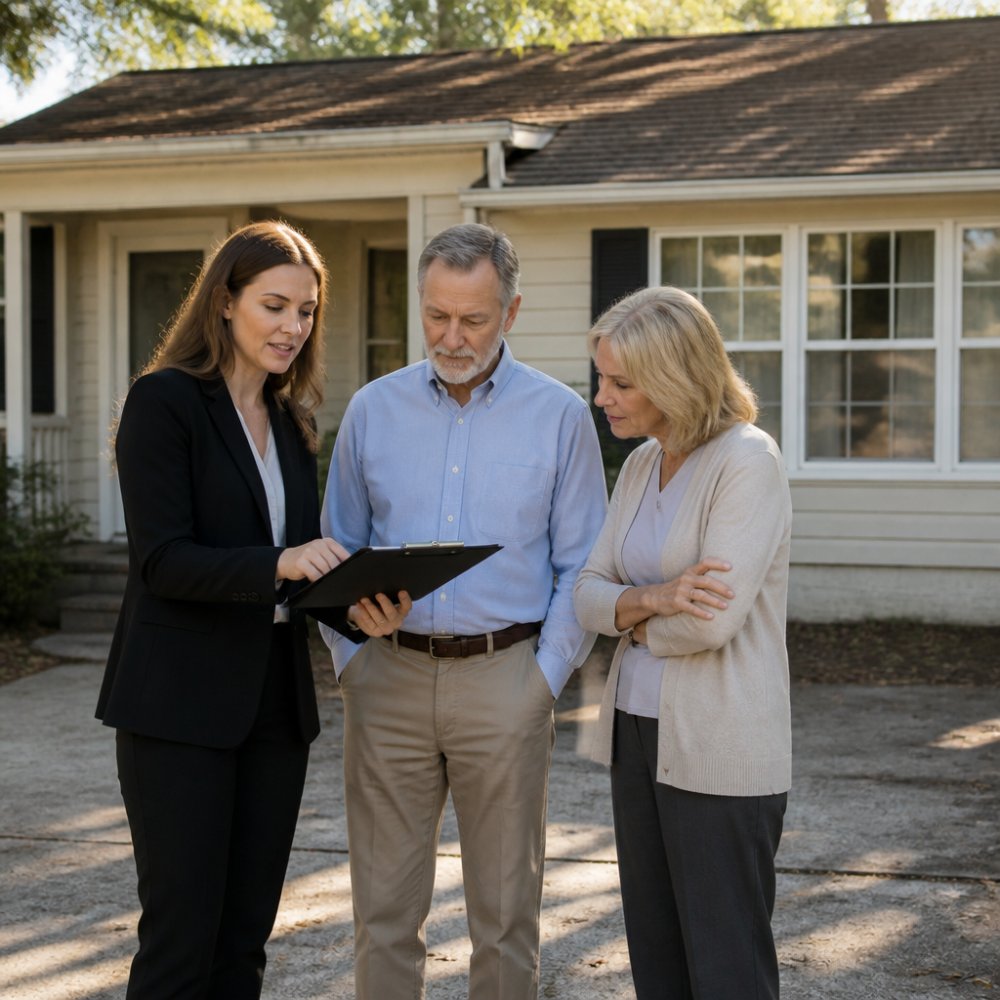
Then decide how much to prepare. Most inherited homes need some work. You have three paths:
Approach Best For Trade-off Sell as-is Homes needing major repairs Lower price, faster sale Light clean-up Homes in decent shape Moderate cost, better price Full renovation Homes in strong markets Highest price, slowest timelineWhat most guides miss is that renovation rarely pays back dollar for dollar on an inherited property. Clean, declutter, and fix safety issues. Skip the kitchen remodel unless the home is badly outdated.
Watch OutNever make major repairs before the estate has authority to sell. If probate isn’t complete, you may not be reimbursed for money you spend.
Step 4: Handle Capital Gains Tax on Inherited Property in Florida
The capital gains tax on inherited property in Florida is usually far smaller than sellers fear. That’s because of a rule called the step-up in basis.
The step-up in basis resets the home’s value to its fair market value on the date of death. When you sell, you only pay tax on the gain above that stepped-up value, not on decades of appreciation.
How the Step-Up in Basis Works
Say the home was bought years ago and appreciated significantly. Without the step-up, you’d owe tax on the entire gain. With it, your taxable gain is only the increase in value since the owner passed.
- Value at death: $300,000
- Sale price six months later: $315,000
- Taxable gain: $15,000
Florida also has no state income tax, so you avoid a state-level capital gains hit entirely. Federal rules still apply. Review the IRS guidance on inherited property and confirm your numbers with a tax professional before you close.
Step 5: Selling an Inherited House With Multiple Heirs
Selling an inherited house with multiple heirs is where emotions and logistics collide. Every heir has a legal claim to the proceeds, and every one of them has an opinion about the sale.
Start by getting everyone aligned on three things:
- The asking price and the lowest acceptable offer
- Who pays for repairs, taxes, and insurance until closing
- How proceeds get divided
Put it in writing. A simple signed agreement prevents most disputes.
If one heir wants to keep the home, they can buy out the others. That requires a fresh appraisal and often a new mortgage.
When heirs can’t agree, a partition sale may be the only option. A court orders the sale and splits the money. It’s slow and expensive, so treat it as a last resort.
Key TakeawayGet every heir’s signature on the listing agreement up front. Chasing down a missing signature mid-escrow is one of the most common reasons inherited home sales fall apart.
Step 6: List, Market, and Close the Sale
A strong listing does two things: it reaches the right buyers and it removes doubt. Inherited homes often sit because buyers see risk. Professional marketing removes that fear.
Here’s what a solid marketing plan includes:
- Professional photos and drone shots of the property and lot
- A Matterport 3D tour so out-of-state heirs and buyers can walk the home remotely
- Clear disclosure of the probate status and timeline
- Staging or at least a full declutter before photos
David Dorman Realtor uses advanced marketing tools like 3D tours and drone galleries to help inherited homes compete with standard listings. That matters in a market where buyers skim past weak listings in seconds.
Once you have an offer, the closing follows the normal path: inspection, appraisal, title search, and final signing. The personal representative or trustee signs on behalf of the estate.
Common Mistakes to Avoid When Selling an Inherited Home
The biggest mistake is waiting. Many families let an inherited home sit empty for months, and that costs money every single day.
Watch for these traps:
- Skipping the date-of-death appraisal. Without it, you can’t prove your tax basis.
- Paying for repairs before probate closes. You may not get reimbursed.
- Letting the home sit uninsured. Empty homes need vacant property coverage, not a standard policy.
- Ignoring the HOA. Unpaid dues become a lien that blocks closing.
- Listing before authority is confirmed. The sale can’t close, and you waste months.
If you’re searching for help selling an inherited home near me in Ocoee or the greater Orlando area, work with someone who knows probate timelines and estate paperwork. That expertise shortens the process and protects the estate’s value.
Selling an inherited home in Central Florida involves probate, taxes, and family decisions that rarely move in a straight line.
Frequently Asked Questions
Do I need to go through probate to sell an inherited house in Florida?
Not always. If the property was held in a living trust, owned jointly with rights of survivorship, or covered by a transfer-on-death deed, you may be able to sell without probate. Otherwise, the Florida probate process for real estate usually applies. Summary administration is available for smaller estates, while formal administration is required for larger or contested ones. An attorney can confirm which path fits your situation before you list the home.
What are the tax implications of selling an inherited home in Florida?
The main federal concern is capital gains tax on inherited property in Florida. When you inherit a home, the basis typically steps up to the fair market value on the date of death. If you sell soon after for a similar price, the taxable gain is often small or zero. Florida has no state income tax, so there is no state-level capital gains hit. Speak with a CPA about your specific numbers before closing.
Can I sell an inherited house before probate is finished?
In most Florida cases, you cannot complete a sale until the personal representative has been appointed and given authority by the court. Some buyers will accept a contract contingent on probate approval, which can shorten the timeline once the court signs off. Selling before the estate is opened usually creates title problems. Talk to a probate attorney about whether a pending sale is realistic in your county.
How does selling an inherited house with multiple heirs work?
Every heir on the title must agree to the sale and sign the closing documents. If one sibling wants to keep the home and another wants cash, you can negotiate a buyout or partition. Florida law allows a partition action when heirs cannot agree, but that route is slow and expensive. Getting a written agreement on price, repairs, and proceeds split before listing prevents most conflicts.